What Happened to Japanese Americans During Their Internment During Ww2?

51e. Japanese-American Internment
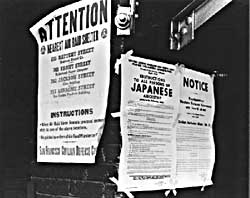
Many Americans worried that citizens of Japanese ancestry would human activity as spies or saboteurs for the Japanese government. Fear — not show — drove the U.South. to identify over 127,000 Japanese-Americans in concentration camps for the elapsing of WWII.
Over 127,000 United States citizens were imprisoned during World War Ii. Their offense? Being of Japanese ancestry.
Despite the lack of whatever concrete bear witness, Japanese Americans were suspected of remaining loyal to their ancestral country. Anti-Japanese paranoia increased because of a large Japanese presence on the Westward Coast. In the event of a Japanese invasion of the American mainland, Japanese Americans were feared as a security risk.
Succumbing to bad communication and popular stance, President Roosevelt signed an executive order in February 1942 ordering the relocation of all Americans of Japanese beginnings to concentration camps in the interior of the United states.
Evacuation orders were posted in Japanese-American communities giving instructions on how to comply with the executive gild. Many families sold their homes, their stores, and virtually of their avails. They could not be sure their homes and livelihoods would still be there upon their return. Because of the mad rush to sell, properties and inventories were often sold at a fraction of their truthful value.
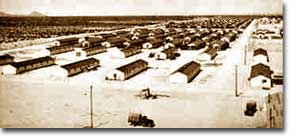
After beingness forced from their communities, Japanese families made these military style barracks their homes.
Until the camps were completed, many of the evacuees were held in temporary centers, such as stables at local racetracks. Almost ii-thirds of the interns were Nisei, or Japanese Americans built-in in the U.s.. Information technology made no difference that many had never even been to Nihon. Fifty-fifty Japanese-American veterans of Earth War I were forced to exit their homes.
Ten camps were finally completed in remote areas of seven western states. Housing was spartan, consisting mainly of tarpaper billet. Families dined together at communal mess halls, and children were expected to nourish school. Adults had the option of working for a salary of $5 per solar day. The United States government hoped that the interns could make the camps self-sufficient by farming to produce food. But tillage on barren soil was quite a claiming.
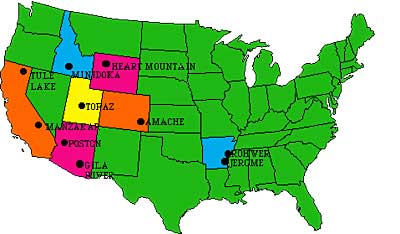
Most of the ten relocation camps were built in arid and semi-barren areas where life would accept been harsh under even ideal conditions.
Evacuees elected representatives to see with government officials to air grievances, oftentimes to little avail. Recreational activities were organized to laissez passer the fourth dimension. Some of the interns actually volunteered to fight in ane of ii all-Nisei army regiments and went on to distinguish themselves in battle.
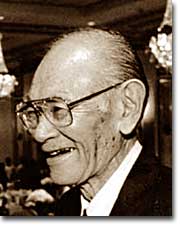
Fred Korematsu challenged the legality of Executive Order 9066 simply the Supreme Court ruled the action was justified as a wartime necessity. It was not until 1988 that the U.Southward. government attempted to apologize to those who had been interned.
On the whole, yet, life in the relocation centers was not easy. The camps were often too cold in the winter and also hot in the summer. The food was mass produced regular army-manner chow. And the interns knew that if they tried to flee, armed sentries who stood watch effectually the clock, would shoot them.
Fred Korematsu decided to test the government relocation activeness in the courts. He found trivial sympathy there. In Korematsu vs. the Us , the Supreme Court justified the executive order as a wartime necessity. When the order was repealed, many plant they could not return to their hometowns. Hostility confronting Japanese Americans remained loftier across the West Coast into the postwar years as many villages displayed signs enervating that the evacuees never return. As a result, the interns scattered across the country.
In 1988, Congress attempted to apologize for the action past awarding each surviving intern $twenty,000. While the American concentration camps never reached the levels of Nazi death camps equally far as atrocities are concerned, they remain a dark mark on the nation's record of respecting civil liberties and cultural differences.

If you like our content, delight share it on social media!


nicholsofigaill1988.blogspot.com
Source: https://www.ushistory.org/us/51e.asp
0 Response to "What Happened to Japanese Americans During Their Internment During Ww2?"
Post a Comment